From Click to Client Podcast · Episode 92
Given Six Months to Live, He Went Back to Work
What three terminal diagnoses taught an early Facebook leader about success, fear, and building a business without putting your life on hold.
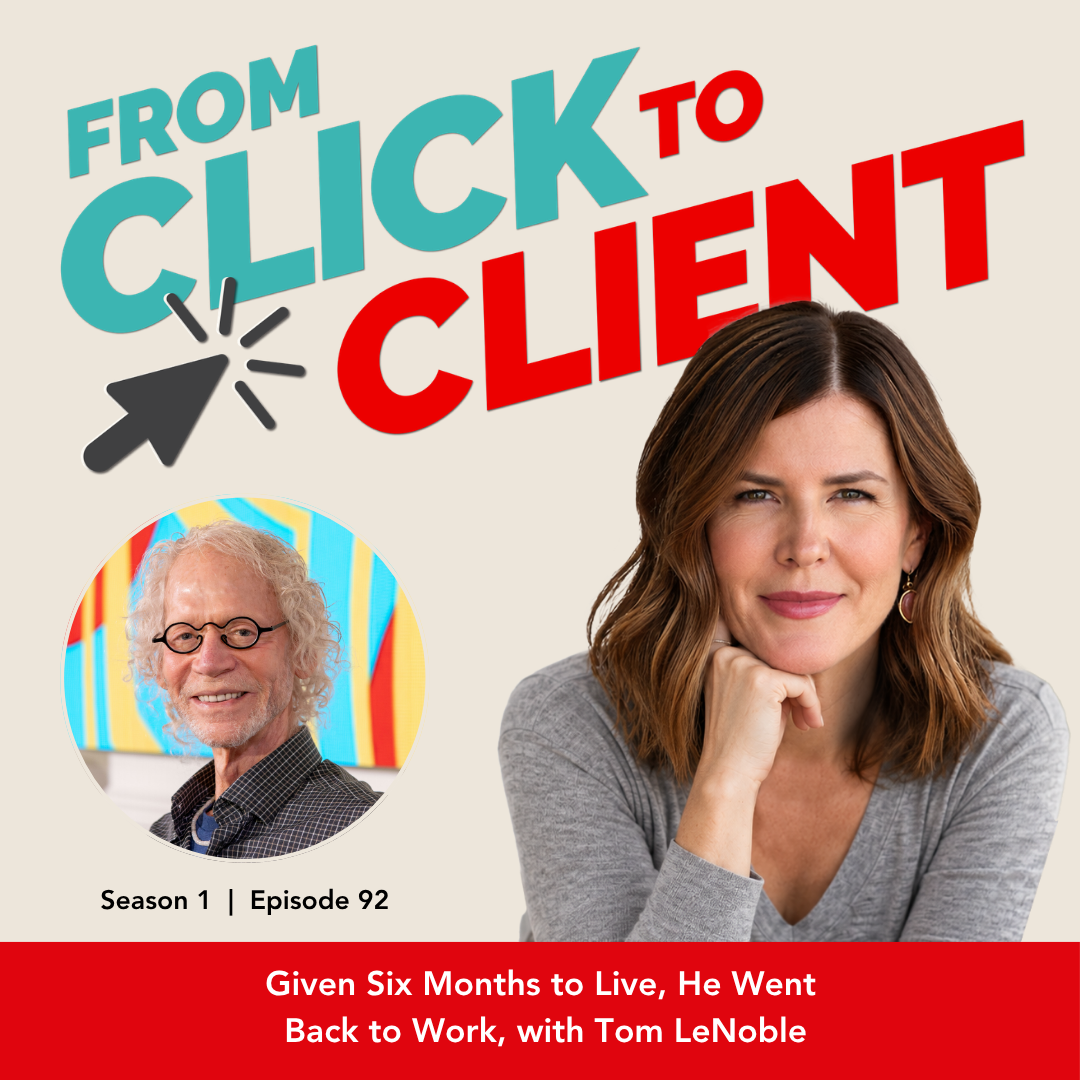
Episode 92
Given Six Months to Live, He Went Back to Work, with Tom LeNoble
Loading the player…
🎧 Apple Podcasts | Spotify | YouTube
About This Episode
What if everything you're working so hard to achieve isn't what matters most? Tom LeNoble has more reason than most to ask. He's been told three separate times that he had six months to live, and each time he went looking for what happens in the seventh month.
Tom built his career at MCI, walmart.com, Palm, and early Facebook, where at 50 he was the adult in a room full of 20-year-olds. In 1999 he went back to work with nine T-cells, against his doctors' advice, and his health soared. Today he advises founders and executives, and he's learned how to redefine success in a way that measures more than the next milestone.
In this conversation, we talk about overcoming fear in business, the Haystack Method he uses to help leaders find their own answers, and the six forms of energy that shape work-life balance for entrepreneurs. If you've been pushing one part of your life at the expense of the rest, this one's for you.
What You'll Walk Away With
- The question Tom asks every time a doctor tells him he has six months to live
- Why remembering your evidence changes how you face fear
- The Haystack Method, and why the answer people find rarely matches the question they brought
- The dinner-table question that shows whether your work is costing you your relationships
Questions This Episode Answers
How do you redefine success as a business owner?
Tom LeNoble measures success across forms of energy like time, relationships, physical vitality, money, and support from others, and he looks for balance rather than maxing out any one of them. When one area gets pushed to the extreme, the others pay for it, like the business owner focused only on money who stops exercising and puts his relationship at risk.
How do you overcome fear in business?
Tom's answer is to remember your evidence. When something feels new and frightening, look back at what you've already faced and survived. He treats fear as an opportunity for growth and channels it into creativity and service to others instead of getting stuck in his own head.
What is the Haystack Method?
The Haystack Method is Tom LeNoble's coaching approach, built on the belief that people already hold their own answers. His job is to hold the space while the client clears away the hay and finds the needle. Often the answer they leave with has nothing to do with the question they brought in.
How do you balance building a business with the rest of your life?
Start by asking whether the urgency is real. Tom asks clients who leave dinner to take an investor's call whether that investor would get up from his own dinner table to take theirs. Then put what matters, from time with your partner to exercise, in your calendar and treat it as non-negotiable.
"Whatever the storms are in your life, just like the storms outside, they leave the ground fertile for planting. What I'm interested in, what are you gonna plant?"
Tom LeNoble
Meet Tom LeNoble
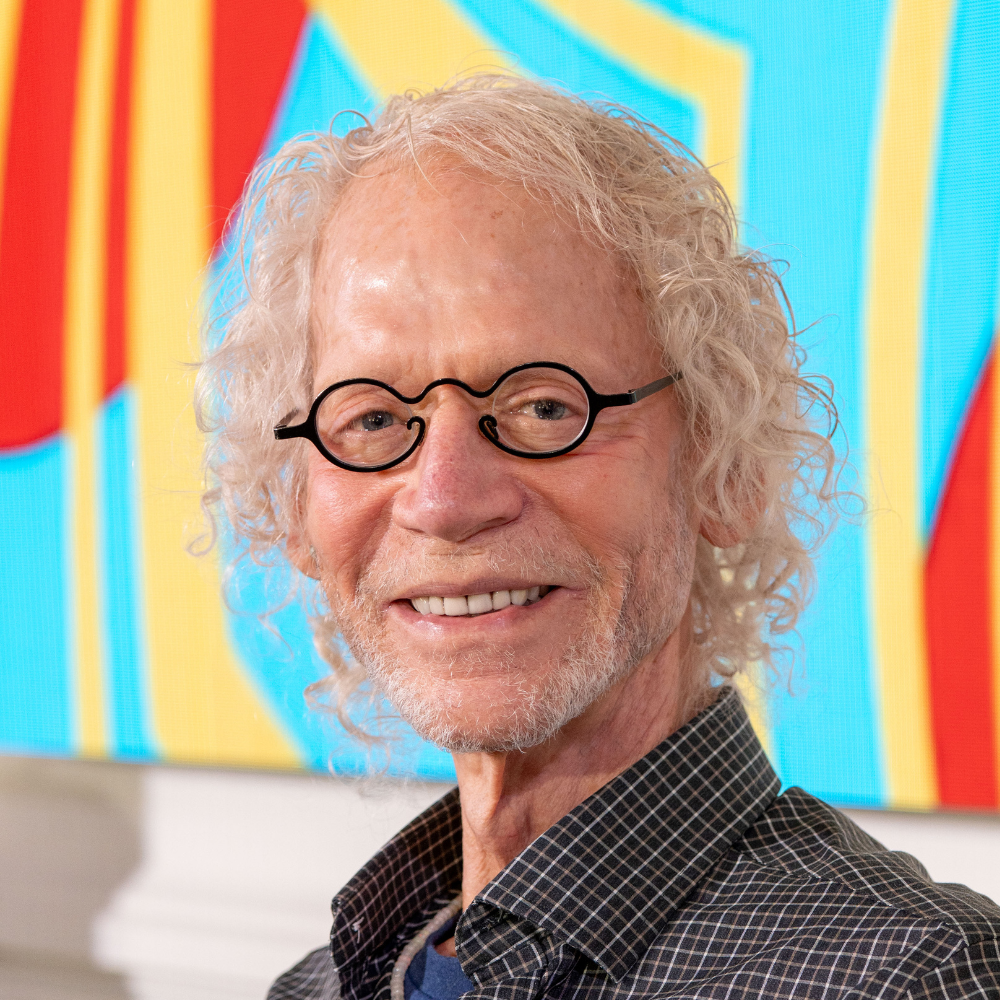
Tom LeNoble is a confidential advisor to founders, executives, nonprofit leaders, business owners, and professionals in meaningful leadership moments. He is an international speaker, coach, and philanthropist whose career spans MCI, Walmart.com, Palm, and Facebook, where he was employee #57, as well as multiple high-growth startups. As CEO of the Academy for Coaching Excellence and a Leadership Coach with the Miller Center at Santa Clara University, he mentors leaders and entrepreneurs worldwide.
He is the bestselling author of the award-winning memoir My Life in Business Suits, Hospital Gowns, and High Heels, and his new book, Morning Ground, is now available. He is also the creator and host of the Opening Pathways podcast. Having survived multiple life-threatening diagnoses and being given six months to live three times, he lives by his conviction: "I'm Still Here!"
Visit Tom's Website
Take the Riskability Quiz
Follow on LinkedIn
Follow on Instagram
Follow on Facebook
Connect with Kris Jones

Kris Jones is the founder of Red Door Stories, a Certified StoryBrand Guide, and a messaging strategist who helps service providers, coaches, and consultants clarify their marketing message so they can attract consistent clients. Her core belief: simplicity is a strategic advantage. Less noise, clearer message, more traction.
Book a Growth Gameplan Call
Take the Free Client Attraction Scorecard
Follow on Instagram
Subscribe to Kris's YouTube Channel and Learn How to Attract More Clients
📖 Episode transcript
Kris: [00:00:00] What if everything you're working so hard to achieve isn't actually what matters most? My guest today, Tom LeNoble, has worked with some of the biggest companies in the world, including Facebook and walmart.com. He's also been told three separate times that he had six months to live. Today, he is a leadership advisor, speaker, and best-selling author. We're talking about success, fear, and how to build a business without putting your life on hold. Tom, welcome to From Click to Client.
Tom: [00:00:31] Kris, it's so great to be here with you and your viewers. I've really been looking forward to this.
Kris: [00:00:37] Me too. Me too. I'm delighted to have you. So let's just delve deep right the get-go. I know, I know that's kinda your jam. Three Times Told Six Months to Live you have been told three times that you had six months to live. How has that changed your definition of success?
Tom: [00:00:53] You know, it's interesting when you've been told that a number of times that you finally deal with what dying might be, what might be like for you, and focus more on living. I always had this sort of interesting question in my mind when they would say you have six months to live, and it was, "Well, what happens on the seventh month?"
Kris: [00:01:14] That says a lot right there. And then what? Yeah. Yeah ... so what did happen on the seventh month?
Tom: [00:01:20] Well, I'm still here. Yeah. And, I think the first time it happened, I remembered I, I got this diagnosis, and I walked to my car, and it was after this experience where they wanted to talk to me, and I said, "I'll be just fine." "Well, no, we need to talk to you." And I said, "No, I'll be just fine." And I went and sat in the car, and I turned the rear view mirror, and I spoke to, this virus had taken over my body, and I said, "If you wanna join my party, come on." If you think you're gonna take me out, you're in for the fight of your life, and I went back to work. well, that led to disability and some other things after I found out how truly serious it was and heard the first time, "You have six months to live at most." And, the second time was quite powerful, too, but it sort of was a different experience of, okay, how do I deal with this one, and what have I put in place that I can use again, and maybe what new can I learn? Mm-hmm. The third time was sort of the charm, so to speak. I know that sounds strange. But I was sitting with, three doctors who said, "Your cancer is back, and it's in five locations, and, and we can't do anything for you. Kris, I've had enough radiation that I glow in the dark. I could be a nightlight in the corner for you." And- ... and I remember they told me that, and I chuckled. And now if you wanna get the attention of a few doctors when they tell you might have six months to live, chuckle. You'll, you'll see what happens. And- But you see, I knew something at that point. I knew what it would mean to me if that was true. I already had a playbook of sorts. But I was more interested in that seventh month. Mm-hmm. And I did what I always did and started digging and r- and learning and finding information and found a doctor that was willing to do something that was... you can now get normally but was experimental at the time in LA. And I remember going through this intake, and I was gonna do these two pretty heavy-duty infusions every week for about 18 weeks, and they wanted me to stay in a hotel every night after I flew down. I was like, by the time I get to the hotel in LA, I could be in my own bed. But the, the funny thing was is that after they told me and I agreed to it, they said, "Well, now you need to talk to the business office," which said to me, "Great, but we need $486,000."
Kris: [00:03:37] Oh, wow
Tom: [00:03:38] So I thought, "Okay, six months to live, $486,000. Let's see what we can do." But the best part of this story that I think links to what possibility is about and about taking risks and being resilient, even reinventing yourself, is that much after the treatment was over I called them one day and I said, "Could you file it on insurance?" And they said, "Well, Mr. LeNoble, we told you they're not gonna pay." I said, "Well, I need the, the explanation of benefits for tax purposes." So they filed it, the insurance paid, they had to give me my money back.
Kris: [00:04:11] Oh my goodness. Wow. Incredible.
Tom: [00:04:14] What if I had not taken that risk?
Kris: [00:04:19] You wouldn't be here. I mean, you... Yeah, to, to initially get that treatment, to do what you needed to do to believe that you could heal, and take the gamble with money you didn't have, or that you did have, maybe it was everything that you had. Just all, all the gambles, the layers of gambles in that, that part- Yeah ... of the journey It
Tom: [00:04:40] was a, a repeatable thing. I, the second time I needed some very serious cancer treatment, and, I was having some back issues, and they said, Well, you can't walk well enough for us to do these treatments. We're, we're not gonna do them. You're not in good enough shape." And again, I couldn't find anybody that was willing to take the risk of my condition and doing it at the time. And so off I went. I did a bunch of research, and I went out of the country. And I remember I was... and I don't advise everybody to do this, but I was in Mexico. And I remember the doctor who I'd interacted with was gonna do back surgery, gonna knock me out in Mexico and do back surgery on me. And, I remember thinking, "Have you lost your mind?" And well, maybe. And then they put the op permit in front of me that was all in Spanish, and I don't read Spanish. I took it in grammar school. I know about how to count to 12 maybe. And I looked at it and went, "Okay, what are you gonna do? You're here." I signed it, took a picture of it, texted it to someone thinking, "Well, somebody should know what I signed."
Kris: [00:05:41] And, and what happened? It obviously went well.
Tom: [00:05:44] I had the surgery. I, The next day, I spent the night. The next day, I went back to, our home in San Diego. Took about three days to recover and then flew back to San Francisco. It was pretty intense surgery. I had some devices put in my back that I knew would not last forever, but I knew they would allow me to walk, so I could walk back into the oncologist's office and say, "I'm ready."
Kris: [00:06:05] Wow. Oh my gosh, what a story. I wanna hear what happened that second round when you were told you only had six months to live, and you said, "I'm..." you had learned a few things, and you were able to do it differently at that point. what did you do differently?
Tom: [00:06:22] Kris, it's a great question. With the first illness, I knew there's something about me, a few things. One, I'm very curious. I have been since a kid. It's got me in trouble a few times, and it's still with me. Yeah. So I got very curious, and I knew the other thing was is I knew I was going to be in charge. So I created something called a healing wheel. If you can imagine the, the spokes of a wheel, and it was Western medicine, Eastern medicine, massage, acupuncture, all these things, supplements, but I was at the center. Mm. And when decisions were made, I made the decisions. My oncologist today calls me a clinical trial of one, which I think is funny. Well, on the second round when it happened, I thought, how do I invoke the power of this wheel again? To get me through this. What needs... What spokes do I need to work with? Mm-hmm. Do I need a new spoke? What levers do I need to push? And then I reminded myself of something that I remind so many clients about, which is remember your evidence. So often we're faced with something, and we wanna have the freak-out moment or the, "What do I do? I've never been here before." And we forget the things we've done before and that we've survived. They may be new. They may feel new, but remembering your evidence is a great way to step into something that you might feel fear about. I've learned that fear is simply an opportunity for growth.
Kris: [00:07:50] Mm, that's a good way to look at it. I heard the other day that the opposite of fear is not calm. It's creativity.
Tom: [00:07:58] I love that. I love that. I've heard so many of these things, the opposite of fear is love, the opposite of fear, but I like the, the creativity. And, I think that's fair in this situation, Kris. I'm glad you shared that with me because I would get really creative, and, um, I, I still do that when I have to go in for testing or I have to get a, some radiation or something, of how I use creativity, whether it's with the staff, with other people that I see. I could go in there and be really freaked out about the outcome, or I could go in there and be of service. And I look around the waiting room. I invariably see people. I can tell now it's their first time. I can tell the fear that they have. And- I'll strike up a conversation. I don't... I'm not intrusive, but it'll typically lead to someone learning that I've been through it before and wanna know what happened. Well, I tell them the stuff doctors don't tell them. It doesn't hurt. It's quick. There's this big mean machine whirring around you. You don't have to take your clothes off. And I see that it brings them down, so I feel that I'm being... I love this creativity or expressing love for others or being service to others and trying to, come from that point of view versus getting in my own stuff.
Kris: [00:09:15] Mm. Beautiful. Early Career and Going Back to Work Tell me a little bit about you prior to all this, and kind of in the, with the lens of... Well, I don't know what type of guy you, you were. I know you were one of the earlier employees at Facebook, and you were, like, the adult in the room, as you like to say. One of the older employees there. and I wanna hear about that experience, and I wanna hear about, like, what... how you were driven back then and maybe how that shifted for you after these- Yeah ... experiences.
Tom: [00:09:48] I, I had, if you read the book, you'll find out that I grew up in a shack with no hot water or refrigeration. I had a little bit of a tumultuous time that's sort of fun to read and also a little, like, oh, my God. And I'd started my career, and I was doing very well at one of my favorite companies, MCI, when I got sick. And I was out on disability for about 10 years, and I worked the whole time. I ran clinical trials in a doctor's office. I helped start the DC Buyers Club. Think Dallas Buyers Club I used to say with a few less hookers, but I think we had plenty. And, and I, I was the executive director of a nonprofit. I did things while I was sick because that's just about me. That engagement kept me from getting too focused on what was happening to me. Yeah. And then I remember in, I was one of those people that had a really difficult time getting suppressed, from this virus. And, in late '99, the doctor said to me, "This is it. This is the best it's gonna be for you." I had nine T-cells. For anybody that knows anything about this virus, nine T-cells is danger, danger, danger, and I named them and asked people to care for them. and I wasn't suppressed. and I've got this thing about me. When somebody tells me something's impossible or can't be done, I, I what happens, it, like, crawls up my neck and out my mouth, and it's like, watch this, right? So I took this information after they shared, you've got your disability check. You've got this cute little apartment in San Francisco. Live your life. Be happy." Well, that wasn't okay for me. So I was still quite sick and decided I'm gonna go back to work. And I had missed the whole dotcom craze, and yet I was going to step right into it. I had missed the internet while I was sick. And where am I but in San Francisco? Where am I but applying for, to work at dotcoms? And so I was interviewing, and I was in Union Square, and I got this call that I was offered this position. And I remember, Kris, I was levitating. Mm. And I said, "You need to capture this and put it somewhere." And I sort of captured it and put it in my solar plexus. You're gonna need this. And then as I came back to ground after I said yes, I'm like, "I have nothing to wear." And I walked in a men's store and bought three suits, 'cause we had to wear suits. Ah. Well, meanwhile, the doctors are telling me, "This is gonna kill you." The disability company says, "We're giving you an extra year to fall back on disability because you can't do this. It will never work." Well, off I went with my nine little T-cells, still taking horrible medicines with side effects. And the great part of this story is I went into this internet startup, and I knew I was bright and I'd pick it back up, and I did, but my health soared. Mm. My health soared. I share that with you, and I I'm... I get that this doesn't work for everybody, but that willingness to step in the arena of possibility, I think the universe, love, God, whatever you want to call it, has no choice but to respond in your favor and be able to support you. so that's how that happened, and so I started this career then with, in the startups and then walmart.com and at Palm, and got that call at my desk one day from a recruiter at Facebook, which was still in colleges. Nobody knew what it was. It was still called The Facebook. I thanked them and hung up. And a buddy called and said, "I referred you to Facebook. You didn't even talk to them." I'm like, "What's Facebook?" And so I went and interviewed with Mark Zuckerberg. Great story. Mm. Look, when I was... when he was 19. And I took this huge risk. I got really intrigued with the product and with this willingness of people to wanna share information. I left my cushy office, looking over the bay, traveling all over the world, and I show up my first day, and they had moved from this little office over a Chinese restaurant, I think, into a real office. And as I walked in, it was a sea of desks and triads. And there was one office in the back corner, and as they're walking me, I'm like, "They gotta be taking me there." They took me there, but I was sitting right outside the office. That was the controller's office, and they wanted me in front of the controller who I was gonna work closely with. And there I am sitting with a few people, an office, but a few people, a very small team that reported to me. I'm at the same desk. And I remember sitting back in my chair and going, "What have I done?" Mm. Mm. And then later in the day, I looked at them and I said, "Where are the phones?" And in horror they said to me, "Phones? We don't wanna use phones. We talk to everybody on email." And I knew at that moment somebody would have a phone, somebody would be talking to people. 'Cause my background, I knew that was true, and it would likely be me. But it was interesting. Here I, at 50, stepped into this environment of everybody was 20, 21, deferring law school, business school, medical school for this dream job at Facebook, 'cause it was only in colleges. What a ride. In fact, the book will be out probably in January. The next book is My Life at Facebook: The Adult in the Room. Mm. And I'm going to tell the early Facebook story through my eyes, being the oldest, old enough to be everyone's father.
Kris: [00:14:40] Right.
Tom: [00:14:40] My point of view.
Kris: [00:14:42] Incredible. What, what's one kinda highlight or funny story that happened during that time? 'Cause at that point there were only, like, 50 employees. Is that right, at Facebook, or...?
Tom: [00:14:52] I, I think there were less than that, 'cause some people had already come and gone, so your employee number, how that happens, so. Yeah. when I interviewed, I went in this, office, this rap star, which you have to... This story's great. I walked up these stairs in a suit, got to the top to a graffiti art of women's breasts. As I came around the corner, I see nine kids, that could be my kids, with a few liquor bottles, and- ... ended up talking to Mark, which is a great part of the story. And, I, I think, it's... You get in that environment, and it was so fast-paced. I like to say that your to-do list, if you didn't get to it, forget it. You got a new one tomorrow. But it was, it was- So much fun and education and hard work because, I, I've had the fortune of working with many generations. I work with a lot of Zoomers now, and I quickly learned that the Millennials love to work as a group. Mm. And so where I might have been used to giving individual assignments, when I gave group ones, they would always come back and blow me away with what they had to offer. And shifting that and being able to take people in the beginning of their career, that many of them thought they should have my job, and molding them through and helping them discover what that meant was really great. And, some of the fun that was like, they have a... The Millennials have such a great relationship with their parents. It was made that part easy. But we would go to events or something, and I remember when I took them to a ballgame and we're all on a train going there. and I think they all don't want me to see that they're drinking, and so they're doing all these antics. So those were some of the fun things. you'll read in the book of, like, people that were dating, and they thought that I would, like, think something about it, which I knew about. You can look at people and tell, right? It's not that hard. Oh. And how they would try to keep it from me, it was really, really fun. And- Yeah ... there's lots of fun stories in the book. And in the new book, you're gonna read about, when I left, I told Mark, "I wanna see you in 10 years." And he looked at me and goes, "You're leaving. Why do you wanna see me?" And I said, "Well, I met you when you were 19. I'd like to see you when you're 29. I'd like to see what happened." Well, Kris, I left. I forgot all about it. 10 years later, I'm sitting at my desk and a Facebook message popped up and said, "Still wanna have lunch?"
Kris: [00:16:55] Aw, I love
Tom: [00:16:57] that. And I remember thinking to myself, Tom, do you wanna have lunch with the fifth richest man in the world? To which I replied, heck yeah. And that story of that lunch will be in the book. And, we'll see how it ends because we agreed to do it in 10 years, which happens to be this month.
Kris: [00:17:15] Oh, wow.
Tom: [00:17:16] so this would be at 20 years. And- Yeah ... a lot's changed. I- who knows if I'll get that, that message. We'll see. But a lot has changed since then, but we'll see.
Kris: [00:17:26] Yeah. That's very cool. Real quick, if this show has helped you gain some clarity, hit follow on Apple or Spotify. It takes two seconds, and you'll get the next episode as soon as it drops. It also helps other people find the show and allows me to keep creating this helpful content for you at no charge So I wanna talk a little bit about the work that you do now. I love that... I love hearing that in that phase of your life, in the midst of that difficulty, you going back to work, work, your health soared. And I've read several times that when people retire, their, their often, like, their life is shortened. It's very weird. I have no plans to retire. I think me and a lot of the people that I work with, we're living purposeful lives and doing, doing work that fills us up. And I feel like when you're doing that kind of work, yeah, you might, you might shift how many clients that you work with or how rigorously you work. But, it- I'm comfortable with the idea of continuing to work forever. and I hope I get to. So now when you work with clients, one thing you shared with me is that they come to you with one question but leave understanding a different question. Can you give us an, an example of that?
Tom: [00:18:48] Sure. First, I have to tell you about the retirement. I tried it. I, I tried it. I fell in love, got married, traveled the world, and thought I would retire. And I love to say I retired being retired- ... to be inspired. Because I had more to do, more to share. I'm busier than I ever was, and you can imagine how busy I was being an executive some of those companies. Yeah. I'm gonna be 72 in a few days, and- Wow ... um, I couldn't be more engaged and loving it, and I believe there's something to it. Maybe not for everybody, but I'm not one ready to go pull out the lawn chair and sit around the house. So-
Kris: [00:19:19] Right ...
Tom: [00:19:19] I... To answer your question, Kris, I think what happens when people come to me, there's often a hook about business. There's, um, often a hook about, they've lost their position or they're looking for a new position. They have some challenge before them, and they're focused so much on what that is that what they haven't done is taken it a few levels deeper to explore their role in where they are, what maybe they always wanted to do about what they're bringing to the table and some conflict they're having and where their role is in it. And what I love, I have something in my practice called the Haystack method. Mm-hmm. Like finding a needle in a haystack? I believe people have their own answers. My job is not to give you your answer. My job is to hold the space so you can clear away the hay and find your needle, your answer. And I think what happens in the process is people discover this concept that their approach, their willingness to take a risk, their past... There's so many people that live in the past as if we're gonna have a do-over, like where the, the movies on this, on our videos where we can go back 10 seconds. Life isn't like that. And so I think when we can move people out, out of what happened and away from what might happen into right here in the moment, things get much clearer for them. And often what happens is the answers they leave with had nothing to do with the original question.
Kris: [00:20:56] Mm. Okay, give me an example of a needle that somebody found in that haystack.
Tom: [00:21:04] So I think one is, let's take someone who is, a CEO that called me and said, "I need your help immediately. I'm having a crisis." This is a pretty high-level CEO over a large company and a large group of people. So I got on the phone to him, and I said, "What is going on, John?" And he said, "Well, I've created this whole experience. I've been working on it. I have a team working on it, where I knew I needed to be more in touch with people. And, so I have..." And he went through this litany of this open-door policy, these hours where I'm free, and I kept thinking in my mind he has this red carpet to his office with, plants and stuff and music that's trying to invite people in as he told me the story. And as we dismantled that, we got to his question, which was really more about I don't feel accepted. Mm. And when we explored that, and we kept going, and we got to the point of what do you think about maybe the answer is stepping outside your office? And the, the m- the melding of that, of how it came together and him seeing that is what I love when people latch onto something, and they're so focused and driven about something, and they see that, that where they're coming from and what they're building isn't really, in that case, how you create the invitation for someone to come in. Hmm. I, I have someone else who I'm working with that's fascinating to me, has been very successful. left his job because I think he was a little bored with it. He was very high level, C-level, and is going through this transition. And, I went through this process that I do with people called the five-year look back, and, we're in the middle of it. But what's really exciting to see is I work with, some different forms of energy, and I do this graphic. And as people look at it and see it, and they see where they have excess and where they have, well, they're a little surprised. and in that case, it was great to have this person realize, "I'm just bored, and I really wanna do something for others. I really want to have a relationship." I really... The things that were really of importance when the person came to me, in this case, it was, I'm doing this, I'm doing that. I'm... basically, after having this really strong presence and contributing is doing nothing.
Kris: [00:23:31] Hmm. So what it sounds like is people are coming to you with, like, a business problem, or they're like, "Help. I'm..." Like, "This is not... This needs to be fixed." And what you do is really go way deeper than that, and it's- Mm-hmm ... it feels like your work is more spiritual. You get to I- ... to the root of things. Yeah,
Tom: [00:23:53] I think That's what it sounds like ... I think it's, like, being, getting and willing to maybe look at something beyond what's on the surface. Right. And I don't do... So many people do this with packages and do this with programs and stuff. Everything I do is individualized. I go in it and I assess the person as I'm working with them, and some people can go faster than others. Some people can't. And, that's what guides me. And I have the opportunity... I, I'm actually a philanthropist is what I really do in life, and I get to work with the Miller Center at Santa Clara University, and they put entrepreneurs through an accelerator that are from Africa, Asia, India. And they, when they graduate from the accelerator, they get to have some, get to have coaching. And so I have, I do that pro bono with them, and I get to select who I wanna work with. Well, a lot of my work is focused on women and youth and my philanthropy, and so I always choose women that are supporting women or women that are supporting women and youth, something like that. So right now I have two women in Zimbabwe and, one in India. And you can imagine what they bring to the table is very, very different. And what I love about it is they're so hungry for it, and this idea of them knowing their answer. These are brilliant people. They're running companies, and they're doing really good things for people. What I get is to learn about a new culture and the dynamics in the culture that shift things and what can happen. Find it fascinating. And at the same time is what I can do is help them tease out some ideas and some thoughts to clear away the hay to find that needle.
Kris: [00:25:28] Mm. how would somebody go about that? Like, if somebody is listening today and wondering how to implement that haystack method for themselves, how do, how would one do that without you?
Tom: [00:25:40] Yeah. Yeah, I think that's a, a good question because sometimes we need that support, and I'm also one of those people that when I see something is complex enough, I refer them to someone that's licensed and a little higher level of, of care. I think people that are just willing to explore, I, I spoke to it, but there's a few things. If you're living in the past about what happened, it's done. If you can learn something from it, great. Don't carry it around. Don't drag it around with you. If you're living too far in the future, other than things that we need to do in life or planting a seed for a trip or something, well, we got up today. Some people didn't. Right here is where the magic is. So if you're in those two realms, try and find yourself here. Mm. The other thing I find with many people is what I call the energy of support People are cautious or feel like they're going to bother somebody, or they're inconveniencing somebody to ask for support. The most common thing I see is people who do that for others and don't allow it in for themselves.
Kris: [00:26:46] Mm.
Tom: [00:26:46] I encourage you to look at that and know that there's people in your life that are waiting for the opportunity to support you. Allow them in. The other thing that I also think about is we often go to those closest to us, our spouse, our family, our friends. These people love us. They want the best for us. That doesn't mean they're the best person to talk these things out with. Because they want to protect you, they often don't want you to take the risk. Not always, but often. they even have their own security in mind or something they know about you. Reach out to someone like you or other people that work in this area and get a different perspective on what's going on, and try and learn some of that on your own. There's things you can do. Often I find people that it's all in their head. Take a tool and start writing it down. Put a few columns and title them something and do something to get it out of your head. The other thing that is fascinating that is no... is a no-brainer, just we don't think about it, is we all learn differently, and when we have stuff swirling around in our head, record yourself. Speak it and listen to it. Even the act of saying it out loud in a mirror shifts because you hear it and you hear things that you didn't realize were going on in your mind. And so those are some of the ideas that I suggest to people. Get out in nature or whatever it does for you to get away from things and get creative. Don't take the music. Be in the presence of it- Mm ... and see what you explore and what you find. people that have, have lost their position often I find are angry, and they're looking for retribution even. They're talking about lawsuits and, and everything, and what I find, they're in two worlds. They have a foot in the future, a foot in what happened, yet they're looking for a new position. Well, any good recruiter's gonna know that. And go nothing else, go outside and try to get very far. You're not gonna go very far if the back foot doesn't join the front foot. And so I think that's part of this, is whatever you need to do, if you can do that on your own, great, or seek out the support of someone to help you dismantle that. Because often I find they were treated very fairly. They just can't imagine it happened to them, and the real danger happens in the job market, especially we're in today, is people start turning their eyeballs inward. What's wrong with me?
Kris: [00:29:08] Mm.
Tom: [00:29:09] And that doesn't serve anything.
Kris: [00:29:12] Mm. I love that visual of one leg in the future and one leg in the past, and no legs in the present, and an inability to actually move forward. Yeah. Wow. that's really beautiful. What kind of advice do you have for somebody who is really busy building their business and really passionate about it, but so focused on that that they're kinda forgetting the other parts of their lives, and they're I- working toward that next milestone?
Tom: [00:29:41] I love this question. I had a CEO come to me and we were talking, and as we uncovered, he's worried about losing his relationship. He had been divorced, and he knew work was the cause of it, and he thought work was gonna ruin this new relationship, and he was very into it. And so as we talked for it, through it, he gave me one example of that if an investor were to call and he's eating dinner with his partner- Mm-hmm ... he's gonna get up and take the call. And I think in that case, let's realize, ask ourselves, do you think the investor would get up from his dinner table to take your call? Likely not. So there's something in there about how we're feeling. Then there's this simple thing that I find that happens more than not, is we think we're gonna do it. We talk about doing it, whether it's spending time with a significant other, whether it's exercise, whether it's just taking a break. Put it in your calendar. Non-negotiable in your calendar. Commit to it. For some people, it's doing it with somebody. Whatever it is for you, those things, what you're doing, and I'd love to talk about these six forms of energy and how when they wanna get an excess and some depleted, it's sort of like a hologram. When you break it, you see every little image still in the piece.
Kris: [00:30:58] Mm.
Tom: [00:30:58] How you put the lever in one affects the other.
Kris: [00:31:01] Okay. Wait.
Tom: [00:31:02] So-
Kris: [00:31:02] Wait. Rewind. I wanna go... Let's go back to that, 'cause I really wanna understand what you're talking about with the different energies- Yeah ... and
Tom: [00:31:09] the like. So think of, the forms of energy are things like time, relationship, physical vitality, money.
Kris: [00:31:16] Yep.
Tom: [00:31:17] Support of others. There's six of them, and I love to do this exercise with people where we chart out where they were and where they are and where they wanna be. It sounds really simple, but what you get to see is often people think, "If I'm high, it means good. I wanna keep it there. If I'm low, I need to bring it high," when it's really about balance. And if you think about if you're having issues in your relationship- It's going to affect your physical vitality. If you're not doing something with physical vitality, it can affect your time and your relationship and your ability to support others or get support. So they're all interchangeable, and I love this concept of the hologram where you... Say it's a CD, you break it, you're still gonna see the hole in the pieces, which is why I say when you make an effect on one, it affects the others. Mm-hmm. And so looking at one, because a lot of people say, "I just need more exercise." Well, you may need more exercise, but you take that to the extreme, what happened to these other areas? If I'm focused only on how much money I have What's that going to do? Like the guy who is... thinks that's the answer to his life, who's now ruining his relationship, hasn't exercised in two months, is feeling bad, has gained 20 pounds. So that's where I think these things work interde- are dependent upon each other- Yeah not interdependent. And so there you go.
Kris: [00:32:48] Okay. Thank you for breaking that down. it, it totally clicked. That was perfect. All right. Tom, it has been incredible to have you here today. I wanna hear one last question about your... You've written three books. I wanna hear why you love writing books.
Tom: [00:33:06] I, like probably a number of people, when you were a kid, you thought you'd like to write, and somebody told you you weren't good. And I knew that even memos or, proposals that I had a knack for it. Well, this first book, My Life in Business Suits, Hospital Gowns, and High Heels, which is a memoir, it's won seven book awards, Kris. I wrote it about 16 years ago, and I put it up on the shelf 'cause it was so cathartic. And then about, oh, I guess it's been about three years ago, I have a year-end process I've been doing for about 35 years, and it came up in the process, and it was either trash it or run with it, and I made the decision to run with it. And I came into every door possible open to make that book happen. It's been one of the most liberating things I've ever done in my life. I'm a very private person, and no one knew I was sick. No one knew about hospital gowns. Nobody certainly knew about high heels. They would have never hired me for one reason. But, it is so liberating to do that. So that book has been an... And it's really about helping people see that who we are today is the sum parts of who we've been in our life, and some of those parts may be shameful or, you don't want people to know about it, or they just wouldn't understand. And I think who you are today wouldn't be who you are today without all of those parts on the journey. Morning Ground is a daily empowerment book. You can also find me on Instagram and Facebook every morning, for less than two minutes, where I say, "Before the day asks anything of you, take this moment for yourself," and we explore a word of the day. There's gonna be a volume two and three to that. I did two collaborations. One is, Breaking the Silence, a woman came to me and asked me if I were to participate. It was... She has a nonprofit for domestic violence, and all the proceeds... So I have a chapter in that book. Mm. And then this brilliant woman, put a book out called Unscripted Brilliance from doing these podcasts, and she took about 10 of us and turned them into chapters in books. Mm. Fascinating. I told you about My Life at Facebook, the adult version was coming. Then the final of the My Life series that I know about will be probably at the end of next year, is My Life in Toxic Soup, and it's going to be about my toxic marriage, toxic cancer treatments woven together in a story. And, I'll tell you the secret. The clincher is cancer was a lot easier. and, and it wasn't so easy.
Kris: [00:35:16] Oh my gosh. Incredible. Tom, well, thank you again for being here, and if there's any final thought that you wanna share, go for it.
Tom: [00:35:24] Yeah. I, I just wanna share that remember you get this one life. Whatever you believe the great mystery is that happens after it, your life in this body is finite. Whatever the storms are in your life, just like the storms outside, that the rain and the hail comes down, they leave the ground fertile for planting. The storms in your life do the same things. What I'm interested in, what are you gonna plant?
Kris: [00:35:48] Mm. Thank you, Tom.


Brand & Growth Strategy for Experts Who Want to Stand Out
© 2026 Red Door Stories. All Rights Reserved.
Privacy Policy. Terms of Service. Disclaimer. StoryBrand Website Design by Red Door Stories