From Click to Client Podcast · Episode 94
The Hidden Profits You're Overlooking in Your Business
How one upsell, one price increase, and a follow-up habit most people quit too early can bring in more revenue from the business you already have.
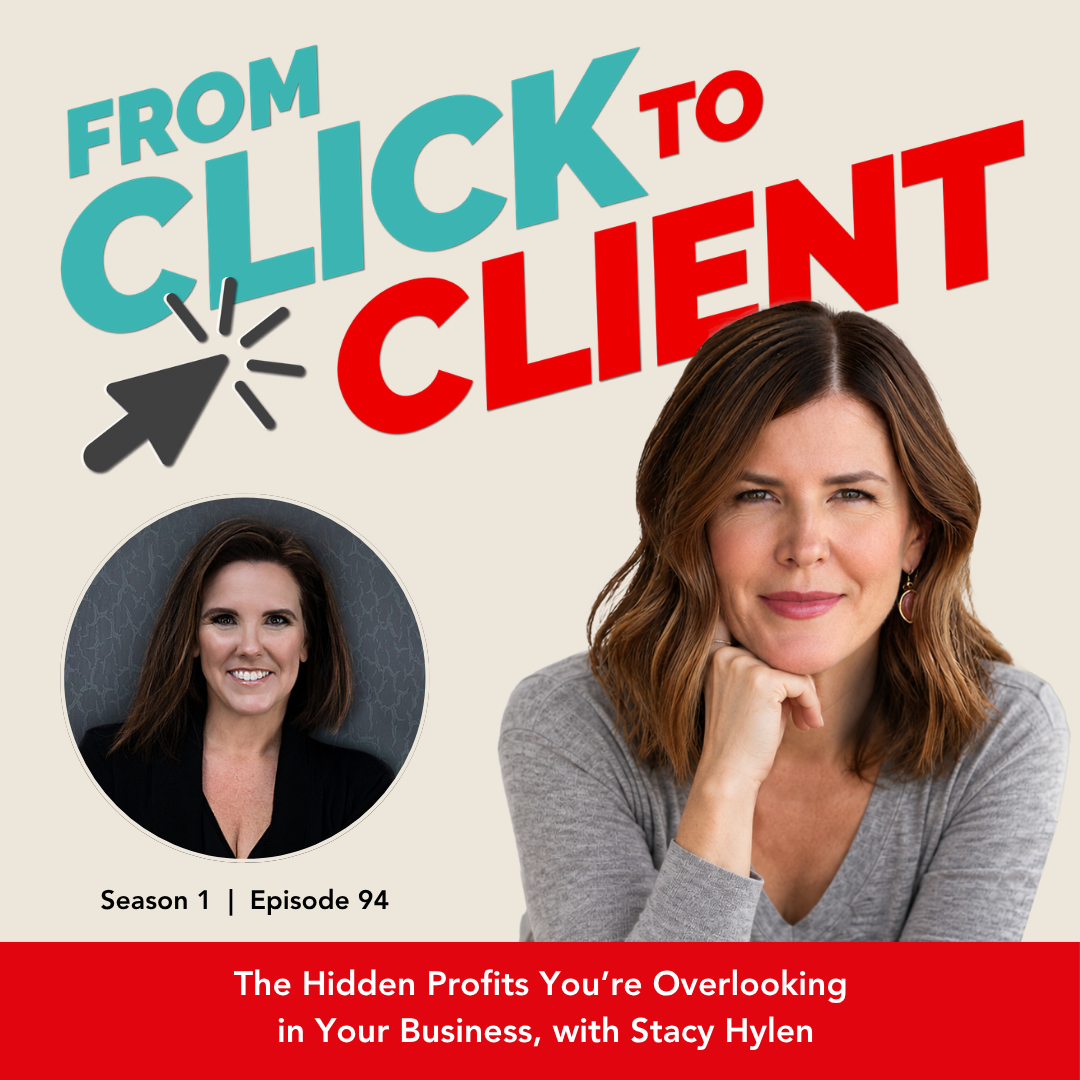
Episode 94
The Hidden Profits You're Overlooking in Your Business, with Stacey Hylen
Loading the player…
🎧 Apple Podcasts | Spotify | YouTube
About This Episode
When growth stalls, most of us assume we need more leads. My guest, Stacey Hylen, has spent 25 years coaching business owners, including her time as a coach at Tony Robbins and Chet Holmes's Business Mastery, and she says the faster path to more revenue and more clients usually starts with the business you already have. The average business she works with finds about $85,000 in hidden profits.
We talk about the simple upsell that grew one auto parts store's sales 48% in one month, why the price that feels scary to say is often too low, and why clients who get a discount tend to be the ones who cancel and skip the work. Stacey also shares the sales follow-up numbers that show most deals close after the fifth contact, plus the Dream 100, the dream client strategy Chet Holmes used to land Tony Robbins as a business partner.
If you want to get more clients and more cash without adding more marketing, this is a good place to start.
What You'll Walk Away With
- The easiest upsell to add to your most popular offer, and how to make sure it serves your client
- The moment Stacey realized she'd been undercharging for years
- Why the clients you discount often become the hardest to work with
- The follow-up habit that puts you ahead of 92% of salespeople
Questions This Episode Answers
How can I make more money in my business without more marketing?
Start with what's already in your business. Stacey Hylen suggests adding a simple upsell to your most popular offer, raising prices you've held for too long, and following up consistently. She says the average business finds about $85,000 in hidden profits.
How do I add an upsell to a service business?
Find your most popular offer and ask what would serve those clients. For Stacey's coaching clients, that's a VIP day, an intensive half-day session that helps them get started faster. The upsell should add value without making the original purchase feel like it wasn't enough.
When should I raise my prices?
When your rate has you stuck in the middle, too high for beginners and too low for established clients. When Stacey quoted her raised rate of $500, the prospect asked, "That's it?" She also finds that clients who invest more show up, do the work, and get better results.
How many times should you follow up with a prospect?
More times than most people do. Stacey shares that only 2% of sales happen on the first contact and 80% happen after the fifth, yet only 8% of salespeople are still following up by then. Treat follow-up as serving the client, and use a set sequence so you always know what to say.
"What is scary to us to actually spit out of our mouth is not the same for somebody else."
Stacey Hylen
Meet Stacey Hylen
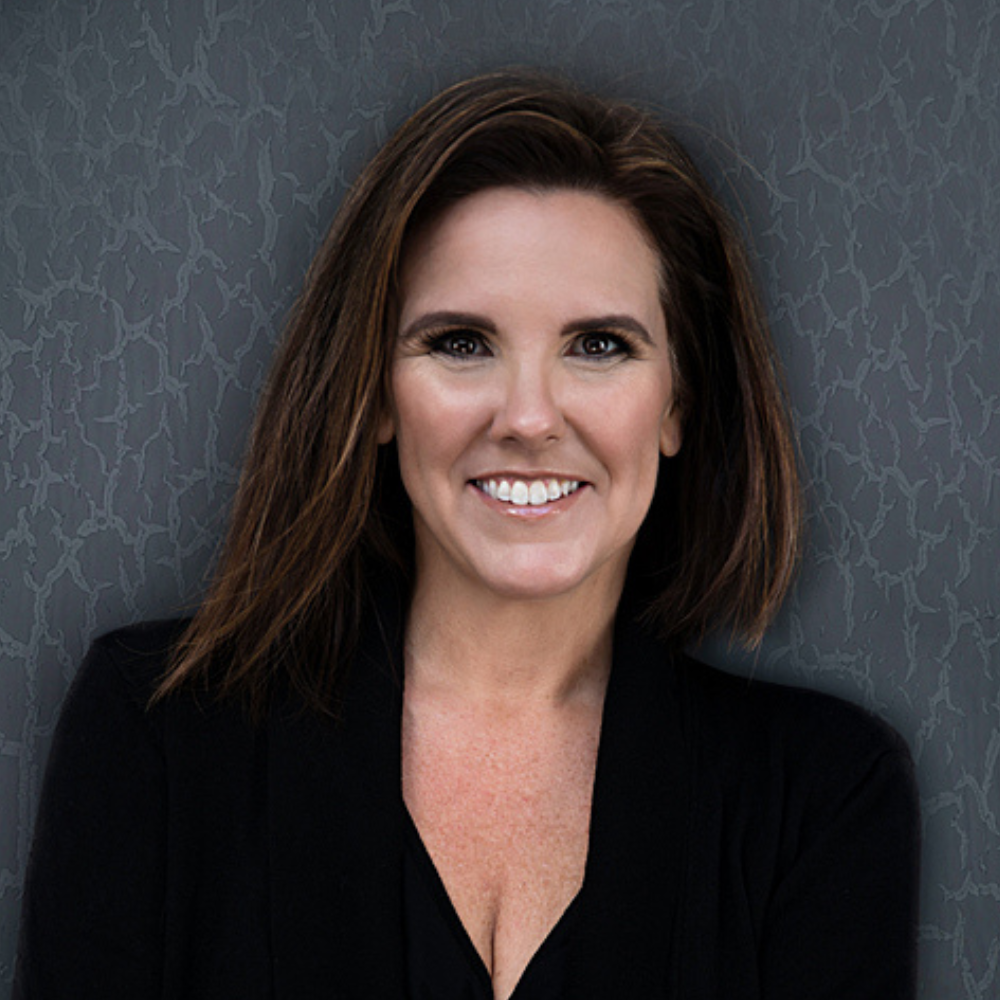
Stacey Hylen is an internationally recognized business coach, marketing strategist, speaker, and certified AI consultant. She helps 6- to 8-figure entrepreneurs unlock hidden profits and add a zero to their revenue without burning out or working more. She's the creator of the Hidden Profits System and author of the book Hidden Profits: More Clients More Cash, and she has been featured in CNN, Inc., MSN Money, Fox Business, and Entrepreneur Magazine. Previously, she served as Vice President of Consulting for Chet Holmes and Tony Robbins' Business Mastery Program, and she was named International Coach of the Year in 2016.
Get Stacey's Free More Clients & Cash Guide
Visit Stacey's Website
Connect on LinkedIn
Follow on Instagram
Subscribe on YouTube
Follow on Facebook
Connect with Kris Jones

Kris Jones is the founder of Red Door Stories, a Certified StoryBrand Guide, and a messaging strategist who helps service providers, coaches, and consultants clarify their marketing message so they can attract consistent clients. Her core belief: simplicity is a strategic advantage. Less noise, clearer message, more traction.
Book a Growth Gameplan Call
Take the Free Client Attraction Scorecard
Follow on Instagram
Subscribe to Kris's YouTube Channel and Learn How to Attract More Clients
📖 Episode transcript
Kris: [00:00:00] Today we gonna be about something every established business owner wants to know. How do you make more money without doing more marketing? That is the million-dollar question. Today my guest, Stacey Hylen, she is a business growth strategist and author of Hidden Profits, and she believes there's often more revenue sitting inside the business that you already have, just hidden in there. So we're, we are going to uncover that today. Stacey has worked with Tony Robbins, Chet Holmes, coached entrepreneurs across a wide range of industries, and today she helps business owners find the opportunities that they may be overlooking. Stacey, welcome to From Click to Client. I am so excited to get into this with you today. Oh,
Stacey: [00:00:43] thanks for having me, Kris. I'm really excited to be here.
Kris: [00:00:46] Yeah, me too. So let's talk a little bit about Hidden Profits. Hidden Profits is the name of your book, and I wanna hear about like how you got the idea to do this book and what problem does the book solve?
Stacey: [00:01:02] Yeah, so the book is a long time coming because it came from a conversation, a coaching conversation at Business Mastery. So turn back your clocks to the recession and this, the whole stock market crash and all of that. That was when the first Business Mastery with Tony Robbins and Chet Holmes took place, and business owners had spent $10,000 to be there. Everybody had to go through an interview to be selected, and I was there as one of the coaches for Chet and Tony Robbins. And so what happened is he had a guy in the audience stand up for coaching and he said to Tony, "I've tried everything and nothing works." And can you imagine saying that to Tony Robbins? Like, "I've tried everything and nothing works."
Kris: [00:01:41] Yeah, yeah.
Stacey: [00:01:42] And Tony said, "Okay, well tell me what you did." And he said, "Well, I tried this and this and this." And Tony said, "Well, that like three things. You've said everything, and that's obviously not everything." He said, "Well, you must have tried a lot of times." And the guy said, "Well, I tried a few times."
Kris: [00:01:54] Mm.
Stacey: [00:01:55] And he said, "Well, what happened?" He said, "Well, I didn't have the, the resources to keep going. I didn't have the team and the money and the time." And Tony asked him, he said, "Have you ever seen somebody that has had less resources than you be more successful than you?" And the guy said, "Yeah." He said, "You see them all the time on Success Magazine or Entrepreneur or Forbes, that, this immigrant came to North America with $300, didn't speak English, didn't have a network, and they have these multimillion-dollar companies." And Tony said, "So it's not a lack of resources, it's a lack of resourcefulness."
Kris: [00:02:30] Mm.
Stacey: [00:02:30] And so that one sentence became my impetus for Hidden Profits because my clients at the time, they had lost funding. They had orders, crashing out. people that already said they were buying canceled. people were going bankrupt overnight. And so for my clients, I thought, "How can I get more resourceful without the resources, without spending more money on ads?" Mm. And so that's where Hidden Profits came from, is from that question, starting to do that with my clients.
Kris: [00:02:55] Mm. Incredible. I love that. so where are these ... that's usually hiding?
Stacey: [00:03:02] They're hiding right in plain sight, and usually, that's the challenge is that, Jim Rohn always said, it, motivation wears off because you have to do it all the time, and hidden profits, you have to look for them all the time. Right. And so they're in your business, in things that you're doing, but you might just not be doing enough or to the next level and to be able to get those profits in. So the average business finds $85,000 in hidden profits. Wow. So the first place I, I tell people to look is, what do you already have in your business? Do you have a lot of clients? Do you have a lot of sales happening? And then we look at, where, which hidden profit is gonna be the fix for them that's the fastest and, start doing them one after another, and then plugging them in to happen more frequently in their business. So, for an example, one of my clients came to me and he said, "Stacey," he filled out the questionnaire. It was a new client. And he said, all of his staff was really not listening to what he said and was not coachable. And so when we got on the first call, I was thinking, after reading the intake questionnaire, that he was gonna have to release a lot of employees and start hiring.
Kris: [00:04:03] Mm-hmm.
Stacey: [00:04:03] And he said, "Stacey, I can't hang up my hat in church if I let my people go," because, it was ... He said, "It's a small town. Everybody knows everybody. A lot of the people that work for me go to my church. A lot of people are relatives." He had people that were 80 years old that were his uncles- Mm uh, nephews. And so again, we started to get that creativity hat of the hidden profits and say, "Okay, what can we do that would be easy without..." because he had a team that wasn't really open to change. Mm. And so we started looking at what he had in place was lots of sales, right? He was having a lot of sales, so we said, "How can we maximize that sale?" So we looked at his most popular product and added an upsell for it. So an upsell, want fries with that, is one of the hidden profits. Right. It's one of the easiest to do. Yeah. Because you've already done all of the work to get the client in the door. You've already done the marketing, the sales, all of that. They're there. have their credit card out. Now's the time to say, "Hey, would you like fries with that," or whatever your version of fries is going to be. So for him- Right ... it was an auto parts store. We a- it was an oil change was his most popular product. So we added on air filter. And it was really a very simple conversation for his employees to have, and he increased his sales 48% in one month-
Kris: [00:05:13] Oh my gosh by doing that.
Stacey: [00:05:14] Yeah. So that was a fun hidden profit.
Kris: [00:05:16] Yeah, and not a lot of extra work at all. No. No, not at all. I, I was just talking to my partner the other day about how in college I worked at The Gap, and at The Gap, they measured everything by units. And so if you sold a $50 top, that was equivalent to one unit. If you sold two socks, that was two units. So basically, if I sold a shirt, I would... I was highly encouraged to try and add another unit to that, which in a way is an upsell. Like you said, they've got their credit card out. What's the big deal about throwing in another sock? Yeah, absolutely. And ultimately, those little things add up over time, so I love that.
Stacey: [00:05:59] So- They, they really do, and even if it's small. Like, we had a restaurant that one of my coaches did this with, and it was for, I think it was an appetizer, and they increased their sale enough to pay for their coaching for the whole year just from adding an appetizer. Wow. And so it was really fun because in that case it was a father-daughter restaurant, and the daughter was against the coaching, and they did this one thing and it paid for the coaching all in one.
Kris: [00:06:21] I love it.
Stacey: [00:06:21] And they were like, "Oh, okay, that makes sense." Yeah. And then they were like, "Okay, maybe we could do an upsell for the dessert," right? And so good restaurants are trained. They train their staff to do these upsells naturally, and you'll, your listeners or watchers are gonna start to see upsells in the wild now.
Kris: [00:06:35] Mm.
Stacey: [00:06:35] Because their particular activating system is thinking about upsells. Yeah. You're gonna go somewhere and you're like, "Ooh, they asked me about getting socks," or, "They asked me about-" Right ... "buying a belt," or whatever it is. Right. So it'll be fun to see and then apply it to your own business.
Kris: [00:06:46] Yeah. it's such low-hanging fruit, right? It's pretty effortless. They're already there. And I think there's this idea that if we wanna grow, we need more leads. We need more people to come through our program or our offer or our one-on-one work, when really the first thing you need to think about is who are you already serving and how can you either upsell them or offer them something in addition? 'Cause once they've purchased from you, they know, like, and trust you, and it's just so much easier for them to buy another thing. So why do you think that is culturally in business that we think, "Oh, automatically we need more leads"?
Stacey: [00:07:25] Well, I think it's easier sometimes to think, "Oh, it's the answer is outside of me." Mm-hmm. And like, if something's not happening, they think, "Oh, well, people aren't coming, people aren't buying," versus thinking, "Oh, what can I do with my resources I have here now?" the other thing I think is more of a cultural thing in the entrepreneurial community, that there's so many bright, shiny objects out there that everybody's looking at, "Oh, I'm gonna buy this program to help me with Facebook ads. I'm gonna buy this program to help me do, Instagram," Whatever it is, there's always the new shiny object that people think... like the yapping thing that happened, that she made- Yes ... millions of dollars because everybody's like, "Oh, I need to learn how to yap on Instagram," versus, actually talking to the people that they're, that are following them and liking them and commenting on their posts that are on Instagram. Right. That they could actually get as clients.
Kris: [00:08:12] Right. Right. I, I wanna delve in. One of the things that you work with your clients, and I'm, I imagine you talk about this in your book as well, is pricing and the ways that business owners get that wrong. let's talk a little bit about that and how to get it right.
Stacey: [00:08:30] Yeah. Oh, that's such a good, juicy question. so I think one of the challenges with pricing is that we look at pricing from, Sometimes we get a little stuck in a pricing level that people will stay for years, especially coaches and consultants like the people that are listening to this, that they don't raise their prices because they're scared, they're, they already think they're charging a lot. I remember my very, I started out coaching 25 years ago, back when nobody knew what coaching was, and I remember I was going to BNI meetings and I was charging about $350 a month at this point, and, I wasn't having a lot of luck converting people to clients because a lot of people I was talking to weren't established enough to actually invest in coaching. They didn't know what coaching was. and so I was working with my coach at that time, and she said, you really need to raise your rates because your rates are too low, so they're not appealing to the higher entrepreneurs and they're too high for the lower people." Right. So it was that messy middle, the blah spot. Yeah. And so kind of like you see the smooth stores online too. It's like the middle ground there is not a very good place to be. Right. So, I think that's why, like, JCPenney's and Sears and places like that aren't around, because they were in that messy middle versus somebody like Walmart is down here and, the upper level, like Saks Fifth Avenue and these stores are doing better. So, One of the things to think about is not staying stuck where you are. So when I was at that level and my coach challenged me to raise my rates, I had gone to an event, an internet marketing event, and I stood up at the mic, and I had given somebody some coaching. And all of a sudden at the end of the, that session, people started running to the back of the room and giving me their cards and me in the bathroom line. Like, "Oh my gosh," like, "I need help." And so I got on the call with this gentleman for, a consult, and I was like, "I'm gonna say my new rate. I'm gonna say my new rate." I'm gonna do it, I'm gonna do it. Wrote it down, made sure I was prepped. And so I told him my rate, and I said, "$500," right? And the guy said, "That's it?"
Kris: [00:10:24] Oh my gosh.
Stacey: [00:10:25] Right? And here he was, like, an entrepreneur that had paid to go to expensive conference and all that, and my rate was too... Like, he still signed up, and the guy went on to, hit the Inc. 5000, two times. Mm-hmm. But it was just like, after that I knew that I was working for less than he would have paid the whole time. I mean- Right ... for years, right?
Kris: [00:10:43] Yeah.
Stacey: [00:10:43] And so I think it's really important to think of, like, what is scary to us to actually spit out of our mouth is not the same for somebody else, right? So like now I'm able to, say, "Oh, it's $30,000 for this. It's $50,000 for this. It's 15,000 for that." And these numbers come out much more easily because, number one, I have the proof behind it that I've been doing this for 25 years, but I also got that support and coaching to give me the courage to keep stretching and keep stretching. Mm-hmm ... the other thing I think that people miss, especially for coaches and consultants, is a lot of times the people that do not invest enough are the worst clients.
Kris: [00:11:19] Mm-hmm.
Stacey: [00:11:19] And I've seen this, that, the people that you give them a special deal, they don't show up for their calls, they cancel last minute. they don't do their homework and the things that they said that they were gonna do. And people that have invested, a good amount, they show up. They do their stuff. they work on that investment to get their results back for themselves.
Kris: [00:11:37] Mm-hmm. Yeah. It's so true. It's so true. They have skin in the game, and so they know that they've gotta show up to actually get the return on their investment. Mm-hmm. They value you and the work that you're doing more, and they actually show up and do the work. I've found that many, many, many ta- let's talk about, Oh, here's the other thought that I had. It's pretty incredible when an entrepreneur or business owner gets clear on the value that they deliver, when they are equipped. And I watch this happen with my clients a lot, when they become equipped with the right words to talk about what they do and the value of it, and the importance of the problem that they solve. I think half the battle, it's not even a battle, but half the work is, like, finding the right words to show how they're different and unique, and then really equipping them with those words so they have them at the ready when they're on sales calls. And when you can very clearly articulate the value of what you do, telling someone the price of it or the investment, is not as hard. Right. It's really not as hard. So true. Yeah. Yeah.
Stacey: [00:12:50] That is
Kris: [00:12:50] so
Stacey: [00:12:50] true. Because I know with what you do, helping people with their language is so important because they get in what I call the dumb gas, that, you stand up at a at a conference to ask a question and you can't see the answer, and everybody sitting down can see it. It's like the air up there is different, Even though people are asking questions. And I think, being able to say what is that value, I would say start to really- mine your data of what you have right now. Like, what are people saying when they first come to you in their intake calls? What are they saying to you when you onboard them? Mm-hmm. What are they saying to you... And now we have Fathom and all these AI tools that we can use to really capture that language. At the end of your coaching calls, ask people, "What are you, what was, important for you today? What are your takeaways today?" And so I always tell the coaches, have people acknowledge what their takeaway is. It does two things. It's gonna help them really cement what they got out of that coaching call, 'cause a lot of times we get off a coaching call and we're like, zoom, go off to the next event. Yeah. You really should block out time after your coaching call to really- Mm ... get clear with that and integrate it- Yeah and start implementing it. But a lot of people don't. And so want them to really have that takeaway before they hang up the Zoom. And then it also then helps you to be able to go back and say, "Oh, look, this person got this and this and this and this." Yes. And then, like you were saying for getting clear on what you do, having that data of, like, people are saying these five things over and over again- Right really can help you see, oh, the value of what I did is that. The value of what I did is that. And I think the other thing it does for business people is that what we do that's easy for us, we don't value.
Kris: [00:14:21] Right.
Stacey: [00:14:22] So a lot of times I could help somebody with something and it's super easy for me, but if they haven't, it's hard for them, they think it's more important. Then I'm like, "Oh, that was something I just pulled out of my hat." But- Yeah ... yes, I pulled it out of my brain because I have 25-plus years of experience-
Kris: [00:14:38] Mm ...
Stacey: [00:14:38] that's helped me create all this understand this business growth stuff that the person that's stuck in their own business looking, just at their thing, they can't see the stuff that's... As one of my clients always said, "You can't see the outside of the peanut butter jar, 'cause you're stuck inside it."
Kris: [00:14:51] Right. Right. You're literally wading through that peanut butter. Yeah. I like that. Real quick, if this show has helped you gain some clarity, hit follow on Apple or Spotify. It takes two seconds, and you'll get the next episode as soon as it drops. It also helps other people find the show and allows me to keep creating this helpful content for you at no charge let's talk a little bit about follow-up. And I am making an assumption. Is this part of your book? Is follow-up tackled in the book? There's- 'Cause there's a lot of- ... absolutely ... money that gets lost in follow-up or, to repeat a very common phrase, like, we leave a lot of money on the table by not- Yeah ... following up in the way that we should. And people need time to process, they need reminders, and I think that there's an important mindset shift around, like, this belief that we don't wanna, show up feeling desperate or badger people or bug them. And I can tell you many times people have followed up with me, and I've been delighted and flattered and really happy to work with them, and maybe I missed their other email, but, Follow-up is really also very low-hanging fruit, not really that hard to do. It's something that can be automated often. Yeah. So tell me your thoughts on follow-up and the importance of that.
Stacey: [00:16:10] Yeah. So sure. So I mean, I think most people skip follow-up because they fear rejection. And so it's not that it's hard to do, it's hard to get through that fear of rejection. Mm-hmm. So I think for somebody listening is to reframe it, is that following up is serving the client, not bugging the client.
Kris: [00:16:25] Mm-hmm.
Stacey: [00:16:26] Right? Because one of the things that, we think is that ... I always tell my clients, your most important thing is to, get a new client, right? But for that client that's out there, buying something is not their top of mind thing that they're thinking about, right? So you are helping them bring it to the top of mind by doing the follow-up. And really, only 2% of sales happen on the first contact. 44% of salespeople quit after one no.
Kris: [00:16:52] Mm-hmm.
Stacey: [00:16:52] And 80% of the sales happen after the fifth contact. Wow. But only 8% of salespeople are still following up then. So y- you're competing against much less, competitors at that point. Right. and also I think when you follow up, instead of thinking that it shows that you're desperate, it really shows that you're professional and that you're taking your business serious- Mm-hmm and you're taking the relationship that you have with that person seriously. Mm-hmm. So I think to come at it from that mindset versus, like, you're bugging people-
Kris: [00:17:19] Right ... really helps. And, and that you're, you're, you're confident enough to know that you can help them should they decide to go down that path with you, right?
Stacey: [00:17:26] Yeah, absolutely. Yeah. And to have, like, there's so many different CRMs and, you have AI now that can help you with this. But I mean, really to put yourself in, have yourself a follow-up sequence that "Okay, I'm gonna follow up after this amount of time. Here's what I'm gonna say." and ha- that, that done for you, because I think part of the follow-up challenge is figuring out what to say every time.
Kris: [00:17:48] Right.
Stacey: [00:17:48] Right?
Kris: [00:17:48] Right.
Stacey: [00:17:49] But by having, but by having that in place, then it takes away the challenge of that. So it really helps you do it much more easily. And now with Fathom and some of the AI tools, if you're doing your sales conversations and doing them, recording them on Fathom, then what that allows you to do is take that transcript, plug it into your AI. Now, your AI should be combined with your training on your brand and your brain, and it allows you to have custom things that's like, "Okay, Kris said this was important. We wanna make sure we mention that in the follow-up." So it allows you to do a better job at following up. It doesn't make it that it's not coming from you. I'm not saying to use it as a replacement for you. What I'm saying is it's helping you make sure that you keep the key and most important things top of mind for you as the person following up.
Kris: [00:18:32] Right. And that it will take you less time to do that because it's feeding you back and reminding you of that information. Absolutely. So it sounds like one of the key things that everybody needs to be doing is signing up for Fathom. It's free. I use it. I love it. And then an alternative to that would be Granola, so- Yeah ... both on your sales calls, but also on your coaching calls, so you can really be learning from the people that you're talking to and- kind of mining for gold in the words that they're already saying, and using their words in your marketing so new clients will really resonate with what you're putting out into the world.
Stacey: [00:19:14] Yeah, absolutely. Because I think so many- Yeah ... people use just vague language, which is why what you're doing is so important, that they're like, "Oh, you wanna be successful. You wanna do this," and it doesn't appeal to anybody because it's so vague and not really getting into what's important to them, so.
Kris: [00:19:29] Yeah.
Stacey: [00:19:30] Yeah, definitely go and download one of those today.
Kris: [00:19:33] So I've got a question for you. What did you learn working with Tony Robbins and Chet Holmes?
Stacey: [00:19:39] Oh my gosh, so much. So I was lucky enough to be the second person that Chet hired when he first started, having coaches come and work for him, because he was at the point that he was charging between 30 and $50,000 a month, and so he said, "All right. We need some people that aren't quite that expensive." and so what... I mean, Chet was, his whole positioning was really important about, the PhD, which is the pig-headed discipline to, like, keep going, was really important. And then something that I do with all of my clients is the Dream 100. So he was the originator of the Dream 100. I know it's been kind of trickle-down effect now- Mm-hmm ... that other people are doing it and teaching it. but he was the originator, and it works. It's how you get your dream clients, and that's how he landed Tony Robbins as a client.
Kris: [00:20:21] Ah.
Stacey: [00:20:22] So
Kris: [00:20:22] he was- But yeah, I am, I'm not familiar with that, so tell me
Stacey: [00:20:25] what that
Kris: [00:20:25] is. Yeah,
Stacey: [00:20:26] so he's- Yeah ... he was, he was... And so it was really fun because I was meeting with Chet every week, and he was telling us he wanted to land Tony as a client. And so he was doing all of the work that he suggests to do, and, what happened was he actually landed Tony as a business partner instead of a client. Wow. So that's how they came together and made Business Mastery was because, Tony's like, "Chet is absolutely brilliant." And if people don't have... I actually have his book on my desk, The Ultimate Sales Machine, the new version with his daughter, Amanda. I'm actually in that version talking about the Dream 100, because one of my clients went from six to eight figures doing that. Wow. So, and I do have a little, this is the, this is the billion-dollar pen that, sending these to clients helps you to really stand out. I'm not saying just use that, but there's a whole strategy behind it to make sure that you're front and center, and you're standing out in a world that there's so much spam and just so much marketing clutter out there-
Kris: [00:21:19] Yeah
Stacey: [00:21:19] that my client was able to land a billion-dollar company as a client competing against huge, $100 billion companies. So- Mm ... it really works amazingly. So that was-
Kris: [00:21:29] There, th- there's a guy, there's a guy that I know that whenever he would identify a client that he wanted to work with, he would send them one Nike Air Jordan shoe in their size, and then he would say, like, "If you want the other shoe, let's get on a call." Or I can't remember what the actual- Oh,
Stacey: [00:21:47] that's so funny. You have to know somebody pretty well- ... like, call to action was ... to get their shoe size.
Kris: [00:21:50] Right? I know. I thought it was really clever. I need to get the details of it. He actually wrote a whole book about this approach. Okay. And I'll have to- Okay ... I'll put a- Is it
Stacey: [00:21:59] the Giftology book?
Kris: [00:22:00] No. No. It's a different one. I... That's a good one. Okay. No, this literally has a Nike Air Jordan on the front of the cover. On the
Stacey: [00:22:06] cover? Okay.
Kris: [00:22:07] I don't know how he got away with that-
Stacey: [00:22:08] Here, here's what I think for the- ... with Nike, but yeah. Yeah ... for the Dream 100, is Chet- always said, "Don't go with expensive gifts."
Kris: [00:22:14] Mm.
Stacey: [00:22:15] Because a lot of industries don't allow that. Yeah. in some cases it can be, like, a little weird for people to receive things. Yeah. So we started with things that were very creative, that were tied into what the client was doing. So, like, for this guy, this, this crazy hair pen.
Kris: [00:22:30] Yeah.
Stacey: [00:22:30] he literally showed up in this prospect's office and he said, "Well, why did you take this meeting?" And he had the pen, and he slammed it down on the desk. Oh. And he said, "Because you kept sending me these things, and I thought you're so persistent." Which goes back to the follow-up that we've been talking about. Yes. That I thought, well, I should give this guy, a minute to tell me a little bit more about it. But you tie it into, like, this guy was like, "Is your logistics, driving you crazy? making you pull your hair out?" So we tie it into- Oh ... whatever we send so that it makes sense that it ties into the client's pains and the client's wants.
Kris: [00:22:59] I
Stacey: [00:22:59] love it. the messaging of the letter.
Kris: [00:23:01] I love it. I love it. It has been such a joy talking with you today. I'd love to hear one thing our listeners can do to find more revenue already in their business. What would you share?
Stacey: [00:23:14] well, I think the, the upsell's something that everybody can do today, right? So find your number one product that you sell and say, "What would really serve my clients?" So it's not about just, like, increasing your lifetime value of your client and selling them more stuff, but what would really serve them. Like, for example, the air filter does serve the people that are doing their oil change, because you need to change your air filter. So if you're a coach, what would serve them? You don't want them to feel like what they bought was not good enough.
Kris: [00:23:40] Mm-hmm.
Stacey: [00:23:40] Like, so for example, people that are my coaching clients, I'll offer them a VIP day, right? During... that could be something else that helps them get started faster, right? Yeah. To get a real intense half-day session before they get started versus just starting off with regular sessions. So figure out what your most popular thing is and find the upsell for that. That's really important. And then we talked a lot about follow-up, so I know people listening today, instead of giving you another strategy, like, look at who you have that you need to follow up with, and the people that are kind of scary to follow up with, do it.
Kris: [00:24:10] To... What's the worst that could happen?
Stacey: [00:24:12] Right.
Kris: [00:24:12] All they can say is yes. I
Stacey: [00:24:13] will tell you,
Kris: [00:24:14] back to the value thing, I have my core offer and my way of working with clients. One of the things I just added was a fast action bonus, because all my clients need really good testimonials. They do great work for their clients. and getting written testimonials isn't so hard, but getting a really good video testimonial is gold, because that little video, it's a minute and a half long, it can sell for you on autopilot. So I didn't- Mm-hmm ... actually, I didn't... it's not technically an upsell, but I approached it with, like, how can I add value? What does every client that I work with actually need, and what would delight them- Yeah ... and make this a total no-brainer decision? So.
Stacey: [00:24:59] Yeah, I love that.
Kris: [00:25:00] Yeah.
Stacey: [00:25:00] Fun thing to think about. Well, and testimonials are so important. And again, to take those videos and make that part of your AI brain that your system, like, I firmly believe in being system agnostic with it.
Kris: [00:25:11] Yeah.
Stacey: [00:25:11] Knows, like, "Oh my gosh, these are Kris's results that she gets. These are amazing." Yeah. And it knows that about you, so it's a lot of fun. And I think the other thing with the testimonials is before you make the follow-ups- Go read your testimonials. It's a really good way, 'cause the... You asked me about Tony and I actually didn't answer. We did talk about how the resourcefulness from Tony, but getting into peak state before you take action is so important. Ah. Mm-hmm. So if you get into peak state before you do the follow-ups, it's really gonna help your energy and come through. And so go read your testimonials file, and you're like, "Oh my gosh, I forgot about that, that I got this awesome result." And it gets you in a much better energy than like, "Oh, I have to follow up and I hate doing this."
Kris: [00:25:50] Totally. That is beautiful advice. I edit all my video testimonials, and it's such a joy. It's such a joy to do because it's like I'm getting to replay as I'm editing the wonderful results that they've gotten, and now I'm realizing after I do that editing, I should follow up with some potential clients after that. Great idea. Yeah. Yeah. And it's the
Stacey: [00:26:14] right time. Yeah. And the other, we had talked about raising your rates, so that's another time. Watch your testimonials, raise your rates. Watch your testimonials. You can do it.
Kris: [00:26:22] I love it. Oh my gosh, so many good nuggets of information, Stacey. I really appreciate you coming on today.
Stacey: [00:26:28] Thanks for having me. It's been a lot of fun.
Kris: [00:26:30] Where can we find you?
Stacey: [00:26:31] Yeah, you can go to Stacey Hylen. Hylen, H-Y-L-E-N, which stands for Help You Leverage Everything Now. so you can go to Staceyhylen.com. I'm Stacey Hylen on all the social media. Or you can go to moreclientsandcash.com, which is trained with my Hidden Profit System. So you can go there, and it will actually walk you through how to take action, 'cause you said, "How can people take action?" If you go there, it'll actually walk you through exactly how to implement some of these hidden profits in your business, and you can start, like, getting that cash in the door right away.
Kris: [00:27:02] Lovely. We will put that in the show notes. Definitely go check that out. I love that domain name. Brilliant. All right, thanks again.
Stacey: [00:27:12] Thanks for having me.


Brand & Growth Strategy for Experts Who Want to Stand Out
© 2026 Red Door Stories. All Rights Reserved.
Privacy Policy. Terms of Service. Disclaimer. StoryBrand Website Design by Red Door Stories